
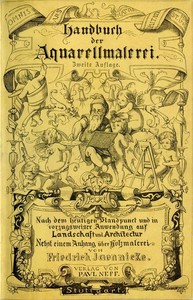
Handbuch der Aquarellmalerei by Friedrich Jaennicke
Let's be clear from the start: Handbuch der Aquarellmalerei is not a page-turning thriller. Published in 1878, it's exactly what the title says—a comprehensive handbook on watercolor painting. Friedrich Jaennicke, an art publisher and writer, structured it like a masterclass for the dedicated amateur. He starts with the absolute basics: the qualities of different papers, how to choose brushes, and the properties of pigments. Then, he builds from simple monochromatic exercises to complex, full-color landscapes and botanical studies. The book is methodical, breaking down techniques like wet-on-wet, glazing, and drybrush into clear, sequential steps.
The Story
There isn't a plot, but there is a journey. Jaennicke acts as your patient, somewhat strict, 19th-century tutor. He guides you from setting up your studio to completing finished paintings. He covers skies, water, trees, architecture, and figures. The 'story' is the progression of the student, from clumsy first attempts to creating a presentable piece of art. It's filled with specific color recipes (like how to mix the perfect grey for distant mountains) and warnings about common mistakes. The book itself is the narrative of mastering a craft.
Why You Should Read It
This is where it gets interesting for a modern reader. First, it's a direct line to the mind of a Victorian-era artist. You see what they valued—precision, observation, and a finished, controlled look. Second, and more practically, a lot of his technical advice is timeless. The physics of water and pigment haven't changed. His explanations of why a wash granulates or how to correct a mistake are incredibly insightful. Reading it slows you down and makes you think about the why behind each brushstroke. It’s less about copying his style and more about understanding the fundamental principles he championed.
Final Verdict
This book is a niche treasure. It's perfect for history-loving artists, watercolor enthusiasts curious about their craft's roots, or anyone who collects old how-to books. You need some interest in art or social history to truly appreciate it. It's not a casual read, but a study companion. If you paint, you'll find yourself nodding along and maybe even trying his centuries-old methods. If you don't, it's a remarkably intimate look at a pastime from a world before television, where creating beauty with your own hands was a supreme form of leisure and accomplishment.
This work has been identified as being free of known copyright restrictions. Thank you for supporting open literature.
Anthony Rodriguez
1 year agoHaving read this twice, the emotional weight of the story is balanced perfectly. Highly recommended.









Aiden Robinson
1 month agoWithout a doubt, the pacing is just right, keeping you engaged. Thanks for sharing this review.