
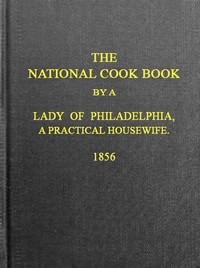
The National Cook Book, 9th ed. by Hannah Mary Peterson
Let's clear something up first: this is not a novel. There's no plot twist on page 42. Instead, 'The National Cook Book' gives us the story of everyday American life in the mid-1800s, told through food. Hannah Mary Peterson compiled what was essentially the 'Joy of Cooking' for her generation. The book walks you through everything from roasting meats and baking bread to making homemade wines and caring for the sick. It's a masterclass in resourcefulness, written for housewives running households without any of our modern shortcuts.
The Story
The 'story' is the journey of a meal, from raw ingredient to finished dish, in a world without refrigeration or precise temperature controls. Peterson organizes her 'receipts' (recipes) with clear instructions, but between the lines, you see the rhythm of a different life. There are chapters on cookery for the sick, on preserving fruits, and on managing a kitchen. The narrative is one of skill, economy, and feeding a family well with what you have on hand. It's a quiet, powerful story of domestic competence.
Why You Should Read It
You should read it because it's genuinely captivating. It turns cooking from a daily task into a historical adventure. You'll find yourself amazed by the ingenuity (and the amount of work!). Trying one of her recipes, like her simple gingerbread, is a direct connection to the past. More than that, Peterson's voice is confident and clear. She was writing to empower other women with knowledge, and that purpose still shines through. It makes you think about the invisible labor that has always gone into keeping a home and a family fed.
Final Verdict
This book is perfect for food history nerds, curious home cooks who want to understand the roots of American cuisine, and anyone who loves social history told through ordinary objects. It's not for someone looking for quick, modern recipes. But if you've ever wondered how your great-great-grandmother might have thickened a sauce or what they served at a fancy dinner party, this is your time machine. Keep it on the shelf next to your modern cookbooks—it provides incredible perspective and a deep sense of respect for the cooks who came before us.
This book is widely considered to be in the public domain. Knowledge should be free and accessible.
Ashley Martinez
11 months agoAs someone who reads a lot, the pacing is just right, keeping you engaged. Exceeded all my expectations.







John Ramirez
1 year agoA bit long but worth it.