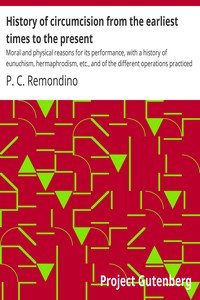
History of circumcision from the earliest times to the present : Moral and…
Let's be clear from the start: this isn't a dry medical textbook. It's a time capsule written by a curious doctor, P.C. Remondino, in the late 1800s. He sets out on one big mission: to trace the thread of circumcision from its ancient origins right up to his own desk.
The Story
Remondino starts his journey in the ancient world, looking at early religious and cultural rituals. He then follows the practice through the Middle Ages and the Renaissance, where explanations for it get mixed up with all sorts of strange medical beliefs. The book hits its stride when he gets to his own era, the 19th century. Here, he documents the fierce debate between doctors. Some saw it as a vital health measure, while others thought it was pointless or worse. He piles on quotes from other writers, old laws, and medical journals, building his case piece by piece. There's no single villain or hero—just the history of an idea, and one man's attempt to make sense of it all.
Why You Should Read It
You should read this because it's a raw look at how people try to understand tradition. Remondino doesn't have modern answers; he's a product of his time, and that's what makes it so interesting. You see his biases, his confusion, and his genuine curiosity all on the page. It's less about whether he's 'right' and more about watching a historical figure wrestle with a question that still doesn't have a simple answer. The book forces you to think about how medical advice, religious custom, and cultural habit get tangled together over centuries.
Final Verdict
This is a niche pick, but a fascinating one. It's perfect for history buffs who like primary sources, or anyone interested in the history of medicine and how social practices evolve. If you enjoy books that explore the 'why' behind long-standing traditions, and you don't mind reading the unfiltered thoughts of a 19th-century author, you'll find this incredibly engaging. Just be ready for some outdated language and ideas—it's all part of the package.
This is a copyright-free edition. Knowledge should be free and accessible.